


Published on: আগ ১৫, ২০২৬ at ২৩:২৬
✍️ অনিরুদ্ধ পাল | সংবাদ প্রভাকর টাইমস

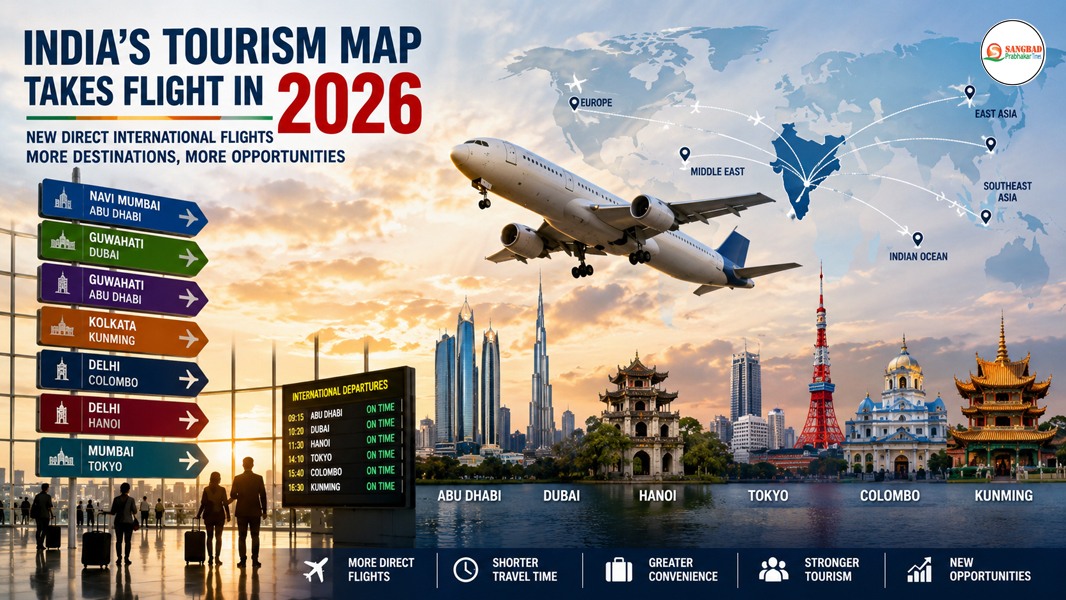
এসপিটি নিউজ, কলকাতা, ১৫ আগস্ট: ভারতের পর্যটন মানচিত্রে ২০২৬ যেন নতুন এক অধ্যায়ের সূচনা করেছে। দেশের বিভিন্ন প্রান্ত থেকে বিদেশের জনপ্রিয় পর্যটনকেন্দ্রে সরাসরি বিমান পরিষেবা বাড়ছে। শুধু দিল্লি, মুম্বই বা বেঙ্গালুরুর মতো বড় শহর নয়, দেশের নতুন বিমানবন্দর এবং আঞ্চলিক শহরগুলিও ধীরে ধীরে আন্তর্জাতিক আকাশপথের সঙ্গে যুক্ত হচ্ছে। ফলে বিদেশ ভ্রমণের ক্ষেত্রে যাত্রীদের নির্ভরতা কমছে একাধিক connecting flight-এর উপর, কমছে যাত্রার সময় এবং একই সঙ্গে তৈরি হচ্ছে নতুন পর্যটন সম্ভাবনা।

২০২৬ সালে ভারতের আন্তর্জাতিক বিমান যোগাযোগের সবচেয়ে তাৎপর্যপূর্ণ পরিবর্তনগুলির একটি ঘটেছে নাভি মুম্বই আন্তর্জাতিক বিমানবন্দরকে ঘিরে। ১৫ জুলাই থেকে Air India Express নাভি মুম্বই থেকে আবু ধাবির উদ্দেশে সরাসরি আন্তর্জাতিক পরিষেবা শুরু করেছে। এটিই বিমানবন্দরটির প্রথম নির্ধারিত আন্তর্জাতিক পরিষেবা। শুরুতে সপ্তাহে দু’দিন উড়ান চালু হলেও পরে তা সপ্তাহে তিনদিনে বাড়ানো হয়েছে।
এই পরিষেবার গুরুত্ব শুধু মুম্বইয়ের বিমানযাত্রীদের জন্য নয়। মুম্বই মেট্রোপলিটন অঞ্চলের পাশাপাশি পুনে ও মহারাষ্ট্রের অন্যান্য অংশের যাত্রীদের কাছেও নাভি মুম্বই একটি বিকল্প আন্তর্জাতিক বিমানবন্দর হিসেবে ধীরে ধীরে গুরুত্বপূর্ণ হয়ে উঠতে পারে। একই সঙ্গে আবু ধাবির মাধ্যমে পশ্চিম এশিয়ার বিভিন্ন গন্তব্যে যাতায়াত এবং সংযোগের সুযোগও বাড়ছে।
২০২৬-এর আর একটি উল্লেখযোগ্য পরিবর্তন হল ভারতের উত্তর-পূর্বাঞ্চলকে সরাসরি পশ্চিম এশিয়ার সঙ্গে যুক্ত করার উদ্যোগ। Air India Express গুয়াহাটি থেকে দুবাই ও আবু ধাবির উদ্দেশে সরাসরি পরিষেবা চালু করেছে। এর ফলে উত্তর-পূর্ব ভারতের যাত্রীদের আন্তর্জাতিক যাত্রার ক্ষেত্রে দিল্লি, কলকাতা বা মুম্বইয়ের মতো বড় বিমানবন্দরের উপর নির্ভরতা কমার সম্ভাবনা তৈরি হয়েছে। একই সঙ্গে অসম তথা সমগ্র উত্তর-পূর্ব ভারতের পর্যটন, ব্যবসা এবং প্রবাসী যোগাযোগেও এর প্রভাব পড়তে পারে।
ভারতের পূর্বাঞ্চলের জন্যও ২০২৬ গুরুত্বপূর্ণ। কলকাতা ও চিনের মধ্যে বিমান যোগাযোগ পুনরুজ্জীবিত হওয়ার ফলে কলকাতা আবার পূর্ব ও দক্ষিণ-পূর্ব এশিয়ার সঙ্গে একটি গুরুত্বপূর্ণ air gateway হিসেবে নিজের অবস্থান শক্তিশালী করার সুযোগ পাচ্ছে। China Eastern Airlines কলকাতা–কুনমিং সরাসরি পরিষেবা পুনরায় চালু করেছে, যা ভারত-চিন বিমান যোগাযোগ এবং পর্যটনের ক্ষেত্রে নতুন সম্ভাবনা তৈরি করেছে।
অন্যদিকে Air India-ও আন্তর্জাতিক নেটওয়ার্ক সম্প্রসারণে জোর দিয়েছে। দিল্লি থেকে ভিয়েতনামের হ্যানয় এবং মুম্বই থেকে টোকিও হানেদার মতো নতুন সরাসরি পরিষেবা ২০২৬-এর আন্তর্জাতিক ভ্রমণ মানচিত্রে নতুন গন্তব্য যোগ করেছে। হ্যানয় পরিষেবা দক্ষিণ-পূর্ব এশিয়ায় ভারতীয় পর্যটকদের জন্য নতুন বিকল্প তৈরি করেছে, আর টোকিও হানেদা পরিষেবা জাপানের রাজধানীর কেন্দ্রের আরও কাছাকাছি বিমান সংযোগের সুবিধা দিচ্ছে।
জাপান, ভিয়েতনাম বা ইউরোপের মতো দূরপাল্লার গন্তব্যের পাশাপাশি দক্ষিণ এশিয়াতেও সরাসরি পরিষেবা বাড়ানোর প্রতিযোগিতা দেখা যাচ্ছে। IndiGo দিল্লি–কলম্বো সরাসরি পরিষেবা শুরু করেছে ২৯ মার্চ থেকে। সপ্তাহে ছয়টি উড়ানের মাধ্যমে রাজধানী দিল্লির সঙ্গে শ্রীলঙ্কার বাণিজ্যিক ও পর্যটন যোগাযোগ আরও শক্তিশালী হয়েছে।
এই পরিবর্তনের পিছনে রয়েছে ভারতীয় বিমান পরিবহণ বাজারের দ্রুত সম্প্রসারণ এবং আন্তর্জাতিক পর্যটনের বাড়তে থাকা চাহিদা। ভারতীয় পর্যটকরা এখন শুধু ঐতিহ্যবাহী ইউরোপ বা পশ্চিম এশিয়ার গন্তব্যে সীমাবদ্ধ নেই। দক্ষিণ-পূর্ব এশিয়া, জাপান, মধ্য এশিয়া, আফ্রিকা এবং ভারত মহাসাগরীয় দ্বীপগুলিও ক্রমশ ভারতীয় outbound tourism-এর গুরুত্বপূর্ণ বাজার হয়ে উঠছে।
সরাসরি উড়ান বাড়ার ফলে সবচেয়ে বেশি সুবিধা পাচ্ছেন leisure traveller, family traveller এবং business traveller-রা। connecting flight-এর ক্ষেত্রে বিমান বদল, দীর্ঘ transit time এবং baggage transfer-এর মতো বিষয় নিয়ে যে অনিশ্চয়তা থাকে, non-stop flight তা অনেকটাই কমিয়ে দেয়। বিশেষ করে পরিবার, প্রবীণ যাত্রী এবং স্বল্প সময়ের ছুটিতে বিদেশে যাওয়া পর্যটকদের কাছে direct connectivity-এর গুরুত্ব অনেক বেশি।
এর পাশাপাশি ভারতের নতুন বিমানবন্দরগুলির উত্থানও দেশের tourism geography-কে বদলে দিচ্ছে। নাভি মুম্বই তার একটি বড় উদাহরণ। আন্তর্জাতিক পরিষেবা শুরু হওয়ার সঙ্গে সঙ্গে বিমানবন্দরটি শুধু মুম্বইয়ের দ্বিতীয় বিমানবন্দর হিসেবে নয়, ভবিষ্যতে একটি গুরুত্বপূর্ণ international gateway হিসেবে নিজেকে প্রতিষ্ঠা করার সুযোগ পেয়েছে।
তবে এই সম্প্রসারণের ছবির অন্য দিকও রয়েছে। আন্তর্জাতিক রুট বাড়লেও বিমান সংস্থাগুলিকে জ্বালানির দাম, ভূ-রাজনৈতিক অস্থিরতা, airspace restriction এবং operational cost-এর মতো একাধিক চাপের মধ্যে কাজ করতে হচ্ছে। চলতি বছরে IndiGo ও Air India জেট ফুয়েলের মূল্যবৃদ্ধির প্রভাবে কিছু domestic capacity কমিয়েছে বলেও খবর এসেছে। ফলে নতুন আন্তর্জাতিক রুট ঘোষণার পাশাপাশি কোন রুট কতদিন স্থায়ীভাবে চালু রাখা যায়, সেটিও বিমান সংস্থাগুলির জন্য বড় চ্যালেঞ্জ।
তবু সামগ্রিক ছবিতে ২০২৬-এর প্রবণতা স্পষ্ট—ভারতের aviation network ধীরে ধীরে শুধু কয়েকটি metropolitan hub-কেন্দ্রিক থাকছে না। নতুন বিমানবন্দর, নতুন আন্তর্জাতিক রুট এবং আঞ্চলিক শহর থেকে সরাসরি বিদেশি সংযোগ ভারতের tourism economy-কে আরও বিকেন্দ্রীভূত করার সম্ভাবনা তৈরি করছে।
এই পরিবর্তনের সবচেয়ে বড় সুফল পেতে পারে ভারতের পর্যটন শিল্প। বিদেশি পর্যটকদের জন্য ভারতের বিভিন্ন শহরে পৌঁছনো সহজ হলে inbound tourism বাড়তে পারে। একই সঙ্গে ভারতীয় পর্যটকদের জন্য বিদেশের নতুন destination আরও সহজলভ্য হলে outbound tourism-এর বাজারও আরও বিস্তৃত হবে। বিমান সংযোগের সঙ্গে যুক্ত হবে হোটেল, ট্রাভেল এজেন্সি, ট্যুর অপারেটর, গাইড, স্থানীয় পরিবহণ এবং পর্যটনকেন্দ্রিক পরিষেবার ব্যবসা।
সব মিলিয়ে ২০২৬-এর আকাশপথের পরিবর্তন কেবল নতুন কয়েকটি flight schedule-এর গল্প নয়। এটি ভারতের পর্যটনের ভবিষ্যৎ কাঠামো বদলে যাওয়ার ইঙ্গিত। দিল্লি, মুম্বই, বেঙ্গালুরুর পাশাপাশি নাভি মুম্বই, গুয়াহাটি, কলকাতা এবং অন্যান্য শহর যদি আরও আন্তর্জাতিক সংযোগ পেতে থাকে, তাহলে আগামী দিনে ভারতের tourism map আরও বহুকেন্দ্রিক হয়ে উঠবে। আর সেই পরিবর্তনের কেন্দ্রে থাকবে একটি শব্দ—Direct Connectivity।
Published on: আগ ১৫, ২০২৬ at ২৩:২৬
India’s Tourism Map Takes Flight in 2026 as New Direct International Routes Expand Global Access
By Aniruddha Pal | Sangbad Prabhakar Times
SPT NEWS, KOLKATA: India’s tourism landscape is undergoing a significant transformation in 2026 as airlines expand direct international connectivity from a growing number of Indian cities, opening new gateways to destinations across the Middle East, Southeast Asia, East Asia and beyond.
The shift is extending international air travel beyond India’s traditional metropolitan hubs and giving travellers more options to fly overseas without the need for multiple connections. For tourism operators, airlines and destination marketers, the expansion is creating new opportunities across both outbound and inbound travel.
One of the most significant developments has been the emergence of Navi Mumbai International Airport as a new international gateway. Air India Express began international operations from the airport with direct flights to Abu Dhabi, marking an important milestone for the newly developed aviation hub. The service initially operated twice a week before being expanded to three flights a week.
The significance of the development extends beyond Mumbai. Navi Mumbai has the potential to serve a wider catchment across Maharashtra and provide an alternative international gateway for travellers from the Mumbai metropolitan region and neighbouring areas. Its growing international network could also strengthen connectivity with the Gulf and other destinations through Abu Dhabi.
Another major development has come from India’s Northeast, where direct connectivity with the Gulf is opening a new chapter for the region. Air India Express has introduced direct services connecting Guwahati with Dubai and Abu Dhabi, reducing the dependence of travellers from the Northeast on major metropolitan airports such as Delhi, Mumbai or Kolkata for international journeys.
The new routes could have implications well beyond aviation. Easier international access can support tourism, trade, education, business travel and the movement of passengers with family and professional links across the Gulf region. For the Northeast, which has long been seeking stronger international air connectivity, the development represents a potentially important step.
Kolkata is also regaining strategic importance as an international gateway in eastern India. The resumption of direct Kolkata–Kunming services by China Eastern Airlines has restored an important air link between eastern India and southwestern China, creating fresh possibilities for tourism and commercial travel between the two markets.
India’s connectivity with East and Southeast Asia is also expanding. Air India has added international services involving destinations such as Hanoi and Tokyo, giving Indian travellers more direct options for visiting Vietnam and Japan. Such services are particularly significant for the rapidly expanding outbound leisure market, as Asian destinations become increasingly popular among Indian holidaymakers.
Sri Lanka, too, remains an important part of India’s expanding regional aviation network. IndiGo has introduced direct Delhi–Colombo services, strengthening air connectivity between the two neighbouring countries and providing additional options for leisure and business travellers.
The growth of direct connectivity reflects a broader change in Indian travel behaviour. Indian travellers are no longer concentrating exclusively on traditional destinations in Europe and the Gulf. Southeast Asia, Japan, Central Asia, Africa and Indian Ocean destinations are increasingly becoming part of the mainstream outbound tourism market.
For passengers, the advantages of direct flights are straightforward. Eliminating an intermediate stop can significantly reduce total journey time while avoiding the complexities associated with changing aircraft, transferring baggage and navigating long transit periods. The benefits are particularly important for families, senior travellers and passengers taking short international holidays.
The expansion of international routes is also closely linked to the emergence of new airports across India. Navi Mumbai is perhaps the most prominent example, but the broader trend points towards an aviation network that is gradually becoming less dependent on a handful of established metropolitan hubs.
However, the expansion is taking place against a challenging operating environment. Airlines continue to face pressure from aviation fuel costs, geopolitical uncertainty, airspace restrictions and operational expenses. Indian carriers have also adjusted capacity on some routes in response to changing market conditions and cost pressures.
For India’s tourism industry, the implications could be substantial. More direct international flights can help foreign visitors reach different parts of the country more conveniently, potentially supporting inbound tourism beyond the traditional circuits. At the same time, easier overseas connectivity can stimulate outbound travel and generate business for travel agencies, tour operators, hotels, destination-management companies, local transport providers and other tourism-related services.
The real significance of 2026, therefore, lies not simply in the number of new flight schedules being announced. It is the gradual restructuring of India’s international aviation geography.
As cities such as Navi Mumbai, Guwahati and Kolkata strengthen their international links alongside established gateways such as Delhi and Mumbai, India’s tourism map could become increasingly decentralised and interconnected.
For travellers, the message is simple: more international destinations are becoming accessible from closer to home.
For India’s tourism industry, the message is even bigger—the country’s next phase of global tourism growth may be shaped as much by where flights take off from as by where travellers choose to go.