

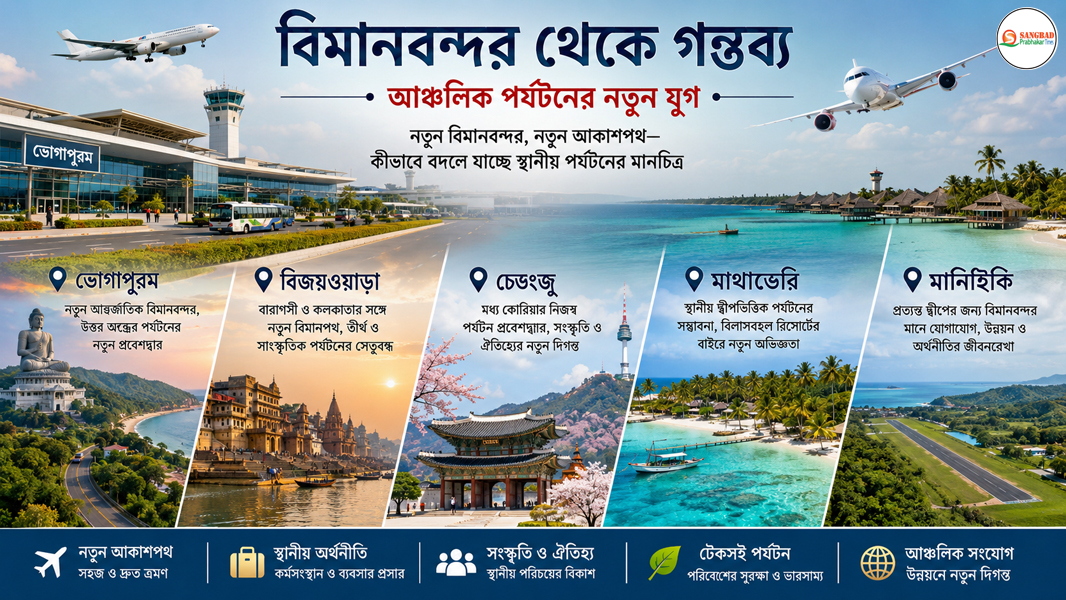

নতুন বিমানবন্দর, নতুন আকাশপথ—কীভাবে বদলে যাচ্ছে স্থানীয় পর্যটনের মানচিত্র

✍️ অনিরুদ্ধ পাল | সংবাদ প্রভাকর টাইমস

এসপিটি প্রতিবেদন: একসময় বিমানবন্দর মানেই ছিল বড় শহরে প্রবেশের দরজা। পর্যটক বিমানে নেমে রাজধানী বা বড় শহরে পৌঁছতেন, তারপর সড়কপথে যেতেন অপেক্ষাকৃত ছোট শহর, দ্বীপ, পাহাড় কিংবা সাংস্কৃতিক গন্তব্যে। কিন্তু বিশ্বের পর্যটন মানচিত্রে সেই ধারণা দ্রুত বদলে যাচ্ছে। এখন বিমানবন্দর শুধু যাত্রী ওঠানামার জায়গা নয়, একটি নতুন পর্যটনকেন্দ্র গড়ে তোলার অন্যতম প্রধান চালিকাশক্তি।
ভারতের ভোগাপুরম ও বিজয়ওয়াড়া থেকে দক্ষিণ কোরিয়ার চেয়ংজু, মালদ্বীপের মাথিভেরি এবং কুক দ্বীপপুঞ্জের মানিহিকি—পাঁচটি ভিন্ন ভৌগোলিক অঞ্চলের উদাহরণ দেখাচ্ছে, কীভাবে আঞ্চলিক বিমান যোগাযোগ স্থানীয় অর্থনীতি, পর্যটন, কর্মসংস্থান এবং পর্যটনকেন্দ্রের পরিচিতিকে নতুন করে গড়ে তুলতে পারে।
তবে পাঁচটি জায়গার গল্প এক নয়। কোথাও নতুন বিমানবন্দর ইতিমধ্যেই চালু হচ্ছে, কোথাও নতুন বিমানপথ পর্যটন যোগাযোগ বাড়াচ্ছে, আবার কোথাও বিমানবন্দর উন্নয়নের কাজ এখনও চলছে। এই পার্থক্যগুলিই আগামী দিনের আঞ্চলিক পর্যটনের সবচেয়ে গুরুত্বপূর্ণ শিক্ষা।
ভোগাপুরম: শুধু বিমানবন্দর নয়, নতুন পর্যটন প্রবেশদ্বার
১৭ আগস্ট ২০২৬ থেকে বিশাখাপত্তনমের নির্ধারিত বাণিজ্যিক যাত্রীবাহী বিমান পরিষেবা নতুন সর্বপল্লি সীতারাম রাজু আন্তর্জাতিক বিমানবন্দরে স্থানান্তরিত হচ্ছে। পুরনো বিশাখাপত্তনম বিমানবন্দরের পরিবর্তে এই নতুন বিমানবন্দরই হবে অঞ্চলের প্রধান আকাশপথের প্রবেশদ্বার।
প্রায় পাঁচ হাজার কোটি টাকা ব্যয়ে তৈরি এই নতুন বিমানবন্দরের পরিকল্পিত বার্ষিক যাত্রী ধারণক্ষমতা প্রায় ৬০ লক্ষ। এর ফলে শুধু বিশাখাপত্তনম নয়, অন্ধ্রপ্রদেশের উত্তর উপকূলীয় অঞ্চলের বিমান যোগাযোগ ব্যবস্থাতেও বড় পরিবর্তন আসতে পারে।
এর প্রভাব পড়তে পারে বিজয়নগরম, শ্রীকাকুলম এবং উত্তর অন্ধ্রের বিভিন্ন পর্যটন ও অর্থনৈতিক অঞ্চলে। নতুন বিমানবন্দরকে কেন্দ্র করে হোটেল, পরিবহণ, খাবারের দোকান, গাড়ি ভাড়া, স্থানীয় ভ্রমণ সংস্থা এবং ছোট ব্যবসার চাহিদা বাড়ার সম্ভাবনা রয়েছে।
সবচেয়ে গুরুত্বপূর্ণ বিষয় হল, নতুন বিমানবন্দরকে শুধু একটি বিমান ওঠানামার জায়গা হিসেবে নয়, একটি আঞ্চলিক বিমান যোগাযোগের কেন্দ্র হিসেবে গড়ে তোলার পরিকল্পনা রয়েছে।
এর সঙ্গে যদি সমুদ্রসৈকত, ঐতিহ্য, আদিবাসী সংস্কৃতি, বৌদ্ধ ঐতিহ্য, প্রকৃতি ও উপকূলীয় পর্যটনকে একসূত্রে বাঁধা যায়, তাহলে ভোগাপুরম একটি বৃহত্তর পর্যটন পরিক্রমার প্রবেশদ্বার হয়ে উঠতে পারে।
বিমানবন্দর থেকে শহর ও আশপাশের এলাকায় যাতায়াতের জন্য পরিবেশবান্ধব বৈদ্যুতিক বাস পরিষেবার উদ্যোগও নেওয়া হয়েছে। অর্থাৎ বিমান যোগাযোগের সঙ্গে স্থানীয় পরিবহণ ব্যবস্থাকেও যুক্ত করার চেষ্টা চলছে।
বিজয়ওয়াড়া: একটি বিমানপথ, একাধিক পর্যটন পরিক্রমা
বিজয়ওয়াড়ার নতুন বিমান পরিষেবা আঞ্চলিক পর্যটনের আরও একটি গুরুত্বপূর্ণ দিক সামনে এনেছে। বিজয়ওয়াড়া থেকে বারাণসী এবং কলকাতার সঙ্গে নতুন বিমান যোগাযোগ চালু হয়েছে। এই পরিষেবা সপ্তাহে তিন দিন পরিচালিত হচ্ছে। এখানে শুধু বিমান পরিষেবা বাড়েনি; দুটি গুরুত্বপূর্ণ তীর্থ ও সাংস্কৃতিক অঞ্চলের মধ্যে যোগাযোগও আরও সহজ হয়েছে।
একদিকে বিজয়ওয়াড়ার কানকাদুর্গা মন্দির, অন্যদিকে বারাণসীর কাশী বিশ্বনাথ মন্দির, গঙ্গার ঘাট ও প্রাচীন সাংস্কৃতিক ঐতিহ্য। ফলে একটি বিমানপথকে কেন্দ্র করেই সম্ভাব্যভাবে একটি বৃহত্তর ধর্মীয় পর্যটন পরিক্রমা গড়ে উঠতে পারে।
কলকাতা যুক্ত হওয়ায় পূর্ব ভারত এবং অন্ধ্রপ্রদেশের মধ্যে পর্যটন ও ব্যবসায়িক যোগাযোগও আরও সহজ হচ্ছে। এই পরিবর্তন ভারতের আঞ্চলিক বিমান যোগাযোগের একটি বড় প্রবণতার ইঙ্গিত দিচ্ছে। এখন শুধু বড় শহর থেকে বড় শহরের মধ্যে যোগাযোগ নয়, বিভিন্ন পর্যটনকেন্দ্রকে সরাসরি যুক্ত করে পর্যটন পরিক্রমা তৈরির চেষ্টা চলছে।
চেয়ংজু: রাজধানীর ছায়া থেকে নিজস্ব পর্যটন প্রবেশদ্বার
দক্ষিণ কোরিয়ার চেয়ংজু আরও একটি গুরুত্বপূর্ণ উদাহরণ।
সিউলের মতো বিশ্বখ্যাত শহরের কাছাকাছি থেকেও চেয়ংজু আন্তর্জাতিক বিমানবন্দর নিজেকে একটি স্বতন্ত্র আঞ্চলিক প্রবেশদ্বার হিসেবে গড়ে তুলছে। দক্ষিণ কোরিয়ার পর্যটন সংস্থার তথ্য অনুযায়ী, ২০২৫ সালে বিমানবন্দরটি প্রায় ১৯ লক্ষ ৪০ হাজার আন্তর্জাতিক যাত্রী গ্রহণ করেছে। ২০২৬ সালের জুন পর্যন্ত সাতটি দেশ ও অঞ্চলের সঙ্গে ২৪টি আন্তর্জাতিক বিমানপথ চালু ছিল। গত দুই বছরে যাত্রীসংখ্যাও উল্লেখযোগ্যভাবে বেড়েছে।
চেয়ংজুর সাফল্যের অন্যতম কারণ শুধু বিমান পরিষেবা নয়। বিমানবন্দর থেকে শহরের কেন্দ্র প্রায় ২০ থেকে ৩০ মিনিটের মধ্যে পৌঁছনো যায়। একই সঙ্গে মধ্য কোরিয়ার বিভিন্ন শহর ও ঐতিহাসিক অঞ্চলের সঙ্গে সড়ক ও রেল যোগাযোগ রয়েছে।
অর্থাৎ চেয়ংজু পর্যটকদের বলছে না—প্রথমে সিউলে নামুন, তারপর এখানে আসুন।
বরং বার্তাটি হল—
“মধ্য কোরিয়াতেই সরাসরি আসুন।”
এটাই পর্যটনকেন্দ্রের পরিচিতি তৈরির নতুন কৌশল। চেয়ংজুর জাদুঘর, দুর্গ, ঐতিহ্যবাহী বাজার, সাংস্কৃতিক কেন্দ্র এবং সুস্থতা-ভিত্তিক পর্যটনকে বিমান যোগাযোগের সঙ্গে যুক্ত করা হচ্ছে। একই সঙ্গে গংজু ও বুওইয়ের মতো ঐতিহাসিক অঞ্চলও বৃহত্তর আঞ্চলিক পর্যটন ব্যবস্থার অংশ হয়ে উঠছে।
ফলে বিমানবন্দর শুধু পর্যটক নামানোর জায়গা নয়, পুরো অঞ্চলের অর্থনৈতিক কর্মকাণ্ডের প্রবেশদ্বারে পরিণত হচ্ছে।
মাথিভেরি: বিলাসবহুল দ্বীপের বাইরে স্থানীয় মালদ্বীপ
মালদ্বীপের মাথিভেরির গল্প আরও আলাদা।
উত্তর আরি প্রবালদ্বীপের এই জনবসতিপূর্ণ দ্বীপ দীর্ঘদিন ধরে নৌপথ ও দ্রুতগতির জলযানের ওপর নির্ভরশীল। সেখানে নতুন বিমানবন্দর তৈরির পরিকল্পনা সেই যোগাযোগ ব্যবস্থাকে আমূল বদলে দিতে পারে।
মালদ্বীপের রাষ্ট্রপতি ২০২৪ সালের ডিসেম্বরেই মাথিভেরি বিমানবন্দর প্রকল্পকে অগ্রাধিকারপ্রাপ্ত বিমানবন্দর প্রকল্পগুলির মধ্যে রাখার কথা জানিয়েছিলেন। প্রকল্পটিকে অর্থনৈতিকভাবে কার্যকর বলেও উল্লেখ করা হয়েছিল।
পরবর্তী সময়ে বিমানবন্দর তৈরির জন্য জমি পুনরুদ্ধারের কাজ শুরু হওয়ার খবরও প্রকাশিত হয়েছে। এর পর্যটনগত গুরুত্ব অনেক। মাথিভেরিতে শুধু বিলাসবহুল অবকাশযাপন নয়, স্থানীয় অতিথিশালা, সামুদ্রিক কার্যকলাপ, প্রবালপ্রাচীর দেখা, দ্বীপজীবনের অভিজ্ঞতা এবং স্থানীয় জনগোষ্ঠীকে কেন্দ্র করে পর্যটনের সম্ভাবনা রয়েছে।
বিমানবন্দর তৈরি হলে পর্যটকরা শুধু বড় অবকাশযাপন কেন্দ্রের মধ্যে সীমাবদ্ধ না থেকে স্থানীয় দ্বীপের অর্থনীতির সঙ্গেও যুক্ত হতে পারবেন। অর্থাৎ মালদ্বীপের পর্যটন ধীরে ধীরে শুধু বিলাসবহুল অবকাশকেন্দ্রনির্ভর না হয়ে বহু দ্বীপকে যুক্ত করা একটি বৃহত্তর পর্যটন ব্যবস্থায় পরিণত হওয়ার সুযোগ পাচ্ছে।
তবে এর সঙ্গে পরিবেশ রক্ষার প্রশ্নও সমান গুরুত্বপূর্ণ। ছোট দ্বীপে পর্যটক বাড়লে সেই দ্বীপের ধারণক্ষমতা কতটা, প্রবালপ্রাচীর ও সামুদ্রিক পরিবেশের ওপর কী প্রভাব পড়বে এবং পর্যটন কতটা টেকসই হবে—এই প্রশ্নগুলির উত্তরও খুঁজতে হবে।
মানিহিকি: যেখানে বিমানপথ অর্থনীতির জীবনরেখা
কুক দ্বীপপুঞ্জের মানিহিকি আরও দূরবর্তী এবং আরও গুরুত্বপূর্ণ উদাহরণ।
উত্তরাঞ্চলীয় দ্বীপগুলির মধ্যে থাকা এই প্রত্যন্ত দ্বীপের বিমানবন্দর উন্নয়ন দীর্ঘদিন ধরেই সরকারের অগ্রাধিকারের মধ্যে রয়েছে। কুক দ্বীপপুঞ্জের পরিকাঠামো মন্ত্রকের মতে, উন্নত রানওয়ে তৈরি হলে বড় বিমান পরিচালনার সুযোগ বাড়বে, পর্যটন বৃদ্ধি পেতে পারে এবং বিমানভাড়া কমার সম্ভাবনাও তৈরি হবে। একই সঙ্গে উত্তরাঞ্চলীয় দ্বীপগুলির যোগাযোগ ব্যবস্থাও শক্তিশালী হবে। প্রকল্পটির লক্ষ্য শুধু রানওয়ে সংস্কার নয়। জলবায়ু পরিবর্তনের প্রভাব মোকাবিলা এবং নিরাপদ ও নির্ভরযোগ্য যোগাযোগ ব্যবস্থাও এর অন্যতম উদ্দেশ্য।
মানিহিকির মতো প্রত্যন্ত অঞ্চলে বিমানবন্দর তাই শুধুই পর্যটনের পরিকাঠামো নয়। এটি স্থানীয় মানুষের জন্য বাজারে পৌঁছনো, প্রয়োজনীয় পরিষেবা পাওয়া, কর্মসংস্থান, জরুরি পরিস্থিতিতে যোগাযোগ এবং অর্থনৈতিক সুযোগ তৈরির মাধ্যম।
উন্নত রানওয়ের ফলে অপেক্ষাকৃত বড় বিমান চলাচল করতে পারলে বিমানভাড়া কমার সম্ভাবনা রয়েছে। ফলে একটি প্রত্যন্ত পর্যটনকেন্দ্রও ধীরে ধীরে আরও সহজলভ্য হয়ে উঠতে পারে।
পাঁচটি বিমানবন্দর, পাঁচটি আলাদা মডেল
ভোগাপুরম, বিজয়ওয়াড়া, চেয়ংজু, মাথিভেরি এবং মানিহিকি—এই পাঁচটি উদাহরণ পাশাপাশি রাখলে আঞ্চলিক পর্যটনের পাঁচটি আলাদা মডেল স্পষ্ট হয়ে ওঠে।
ভোগাপুরম দেখাচ্ছে, নতুন আন্তর্জাতিক বিমানবন্দর কীভাবে একটি বৃহত্তর আঞ্চলিক পর্যটন অর্থনীতি তৈরি করতে পারে।
বিজয়ওয়াড়া দেখাচ্ছে, নতুন বিমানপথ কীভাবে তীর্থ ও সাংস্কৃতিক পর্যটনের পরিক্রমা তৈরি করতে পারে।
চেয়ংজু দেখাচ্ছে, বিশ্বখ্যাত রাজধানীর বাইরে একটি আঞ্চলিক বিমানবন্দর কীভাবে নিজের স্বতন্ত্র পর্যটন পরিচয় তৈরি করতে পারে।
মাথিভেরি দেখাচ্ছে, বিমান যোগাযোগ কীভাবে বিলাসবহুল অবকাশযাপনের বাইরে স্থানীয় দ্বীপভিত্তিক পর্যটনকে এগিয়ে নিতে পারে।
আর মানিহিকি দেখাচ্ছে, প্রত্যন্ত দ্বীপের ক্ষেত্রে বিমানবন্দর কখনও কখনও পর্যটন পরিকাঠামোর চেয়েও বেশি কিছু—এটি পুরো অর্থনীতির জীবনরেখা।
আসল পরিবর্তন: “শেষ ধাপ” থেকে “প্রথম গন্তব্য”
এই পাঁচটি উদাহরণের সবচেয়ে বড় শিক্ষা এখানেই।
আগে পর্যটন পরিকল্পনার মূল প্রশ্ন ছিল—
“বিমানবন্দর থেকে পর্যটনকেন্দ্রে পর্যটককে কীভাবে পৌঁছে দেওয়া হবে?”
এখন প্রশ্নটি বদলে যাচ্ছে—
“বিমানবন্দরকেই কীভাবে পর্যটনকেন্দ্রের প্রবেশদ্বারে পরিণত করা যায়?”
এই পরিবর্তনের সঙ্গে হোটেল, অতিথিশালা, স্থানীয় পরিবহণ, পর্যটক-সহায়ক, রেস্তোরাঁ, হস্তশিল্প, জাদুঘর, দুঃসাহসিক পর্যটন, তীর্থপরিষেবা এবং স্থানীয় জনগোষ্ঠীভিত্তিক পর্যটন—সবকিছুকে বিমান যোগাযোগের সঙ্গে পরিকল্পিতভাবে যুক্ত করতে হবে।
অর্থাৎ শুধু একটি বিমানবন্দর তৈরি করলেই আঞ্চলিক পর্যটন গড়ে ওঠে না।
প্রয়োজন—
বিমানবন্দর + বিমানপথ + স্থল যোগাযোগ + পর্যটন আকর্ষণ + থাকার ব্যবস্থা + স্থানীয় জনগোষ্ঠী + পরিবেশবান্ধব পরিকল্পনা।
এই সাতটি উপাদানের সমন্বয়ই একটি সফল আঞ্চলিক পর্যটনকেন্দ্র তৈরি করতে পারে।
ভারতের জন্য বড় শিক্ষা
ভারতে আঞ্চলিক বিমানবন্দরের সংখ্যা ও গুরুত্ব ক্রমশ বাড়ছে। কিন্তু শুধু যাত্রীসংখ্যা দিয়ে কোনও আঞ্চলিক বিমানবন্দরের সাফল্য বিচার করলে পুরো ছবিটা দেখা যাবে না।
আসল প্রশ্ন হওয়া উচিত— একটি বিমানবন্দর চালু হওয়ার পরে ওই অঞ্চলে কত নতুন পর্যটক এলেন?
তাঁরা কত রাত থাকলেন?
স্থানীয় অর্থনীতিতে কত টাকা খরচ করলেন?
কত নতুন হোটেল, অতিথিশালা ও ভ্রমণ সংস্থা তৈরি হল?
কত স্থানীয় পণ্য বিক্রি হল?
এবং সবচেয়ে গুরুত্বপূর্ণ—পর্যটন থেকে পাওয়া অর্থের কতটা স্থানীয় মানুষের কাছে পৌঁছল?
ভোগাপুরমের ক্ষেত্রে এই প্রশ্নগুলি বিশেষভাবে গুরুত্বপূর্ণ। কারণ নতুন বিমানবন্দরের প্রকৃত সাফল্য তখনই আসবে, যখন শুধু বিশাখাপত্তনম নয়, বিজয়নগরম, শ্রীকাকুলম এবং উত্তর অন্ধ্রের অন্যান্য পর্যটন অঞ্চলও এর সুফল পাবে।
একইভাবে বিজয়ওয়াড়া–বারাণসী–কলকাতার মতো বিমান যোগাযোগকে শুধু যাত্রী পরিবহণের পথ হিসেবে না দেখে তীর্থ, সংস্কৃতি, খাদ্য ও ঐতিহ্যভিত্তিক পর্যটন পরিক্রমা হিসেবে তুলে ধরা গেলে তার অর্থনৈতিক প্রভাব আরও বড় হতে পারে।
ভবিষ্যতের পর্যটন মানচিত্র আর শুধু রাজধানীকেন্দ্রিক থাকবে না
বিশ্ব পর্যটনের পরবর্তী পর্যায়ের সবচেয়ে বড় পরিবর্তন সম্ভবত এটাই।
প্যারিস, লন্ডন, দুবাই, সিঙ্গাপুর, দিল্লি, মুম্বই কিংবা সিউলের মতো প্রতিষ্ঠিত বড় শহরের পাশাপাশি আঞ্চলিক বিমানবন্দরগুলিও ক্রমশ গুরুত্বপূর্ণ হয়ে উঠবে।
কারণ আধুনিক পর্যটক শুধু বড় শহর দেখতে চান না। তাঁরা চান প্রকৃত স্থানীয় অভিজ্ঞতা—সংস্কৃতি, প্রকৃতি, খাবার, ইতিহাস, স্থানীয় মানুষের জীবনযাত্রা এবং তুলনামূলকভাবে কম পরিচিত পর্যটনকেন্দ্র। আর সেই পর্যটককে গন্তব্যের আরও কাছে পৌঁছে দেওয়ার সবচেয়ে শক্তিশালী মাধ্যমগুলির একটি এখনও বিমান যোগাযোগ। তাই আগামী দিনের পর্যটন প্রতিযোগিতা শুধু কে বেশি হোটেল তৈরি করল, তা নিয়ে হবে না।
প্রতিযোগিতা হবে— কে পর্যটককে গন্তব্যের আরও কাছে, দ্রুত, সাশ্রয়ী এবং পরিবেশবান্ধবভাবে পৌঁছে দিতে পারল।
ভোগাপুরম থেকে চেয়ংজু, মাথিভেরি থেকে মানিহিকি—বিশ্বের বিভিন্ন প্রান্তে সেই পরিবর্তনের প্রস্তুতি ইতিমধ্যেই শুরু হয়ে গেছে।
শেষ কথা
আঞ্চলিক বিমানবন্দর আসলে শুধু কংক্রিটের রানওয়ে নয়। এটি একটি অর্থনৈতিক করিডর।
একটি রানওয়ের সঙ্গে যুক্ত হতে পারে একটি অতিথিশালা, একটি রেস্তোরাঁ, একটি হস্তশিল্পের গ্রাম, একটি তীর্থস্থান, একটি সমুদ্রসৈকত, একটি ঐতিহাসিক শহর কিংবা একটি প্রত্যন্ত দ্বীপের স্থানীয় জনগোষ্ঠী। সেই কারণেই আগামী দিনের পর্যটন মানচিত্রে বিমানবন্দরকে শুধুমাত্র বিমান চলাচলের পরিকাঠামো হিসেবে দেখলে চলবে না। বিমানবন্দরকে দেখতে হবে পর্যটনকেন্দ্র গড়ে তোলার অন্যতম প্রধান পরিকাঠামো হিসেবে।
আঞ্চলিক বিমান যোগাযোগ এবং আঞ্চলিক পর্যটন তাই ক্রমশ একে অপরের পরিপূরক হয়ে উঠছে।
আকাশপথ যত প্রসারিত হচ্ছে, ততই খুলে যাচ্ছে নতুন নতুন গন্তব্যের দরজা।
From Airports to Destinations: The New Era of Regional Tourism
How new airports and regional air connectivity are reshaping local tourism, economies and emerging destinations
Aniruddha Pal | Sangbad Prabhakar Times
SPT Special Analysis: For decades, airports were primarily viewed as gateways to major cities. Travellers would fly into a metropolitan centre and then continue by road to smaller towns, islands, heritage sites or remote tourism destinations.
That model is changing.
Across Asia and the Pacific, a new generation of regional airports and air routes is beginning to reshape the tourism map. The airport is no longer merely a point where passengers arrive and depart. Increasingly, it is becoming the engine that connects a region to tourism markets, investment, employment and new economic opportunities.
From Bhogapuram and Vijayawada in India to Cheongju in South Korea, Mathiveri in the Maldives and Manihiki in the Cook Islands, five very different examples illustrate how regional aviation can transform local tourism.
But they also demonstrate an important reality: building an airport alone does not create a destination. The real impact comes when air connectivity is integrated with accommodation, ground transport, local attractions, community participation and sustainable development.
Bhogapuram: More Than an Airport, a New Tourism Gateway
From August 17, 2026, scheduled commercial passenger services serving Visakhapatnam are shifting to the new Alluri Sitarama Raju International Airport at Bhogapuram, marking a major change in the aviation landscape of northern Andhra Pradesh.
The greenfield airport, developed at an estimated cost of around ₹5,000 crore, is designed to handle millions of passengers annually and is expected to strengthen air connectivity across the region.
Its significance extends well beyond Visakhapatnam.
With improved connectivity, destinations across Vizianagaram, Srikakulam and other parts of northern Andhra Pradesh could gain easier access to domestic and international visitors. The resulting demand could create opportunities for hotels, homestays, restaurants, transport operators, car-rental services, tour companies and local businesses.
The larger opportunity, however, lies in creating a regional tourism circuit.
Visakhapatnam’s beaches and coastal attractions could potentially be linked with heritage sites, Buddhist landmarks, tribal culture, nature-based tourism and lesser-known destinations across northern Andhra Pradesh.
That would transform Bhogapuram from simply an airport serving a city into an aviation gateway for an entire tourism region.
The introduction of electric bus connectivity is another important element. If airport expansion is matched by efficient and cleaner ground transportation, the tourism benefits can spread further into surrounding communities.
Vijayawada: One Air Route, Multiple Tourism Circuits
The expansion of air connectivity from Vijayawada offers another model of how regional aviation can reshape tourism.
New flight connectivity linking Vijayawada with Varanasi and Kolkata is creating easier access between important cultural, religious and economic centres.
The significance goes beyond passenger convenience.
Vijayawada is home to the Kanaka Durga Temple, while Varanasi is one of India’s most important spiritual and cultural destinations, centred around the Ganges, its historic ghats and the Kashi Vishwanath Temple.
Improved air connectivity between such destinations could encourage the development of wider pilgrimage and cultural tourism circuits.
The Kolkata connection also strengthens links between eastern India and Andhra Pradesh, potentially supporting leisure travel, pilgrimage, business tourism and family travel.
This reflects a broader shift in India’s aviation strategy: regional routes are increasingly being viewed not merely as transport links, but as potential building blocks for new tourism corridors.
Cheongju: Building a Tourism Gateway Beyond Seoul
South Korea’s Cheongju provides a particularly compelling example.
Located within reach of Seoul but outside the capital’s traditional tourism ecosystem, Cheongju International Airport is increasingly positioning itself as a gateway to central Korea.
According to tourism authorities, the airport handled around 1.94 million international passengers in 2025, while its international network expanded across several countries and regions.
Its advantage is not simply the number of flights.
The airport offers relatively convenient access to central Korean destinations, with road and rail connections linking travellers to cities and heritage areas across the region.
That creates a different proposition for visitors.
Instead of arriving in Seoul and travelling onward to central Korea, travellers can increasingly enter the region directly.
Cheongju is also benefiting from efforts to connect aviation with cultural and tourism assets, including museums, fortresses, traditional markets, heritage sites and wellness experiences.
Nearby destinations such as Gongju and Buyeo can form part of the same regional tourism ecosystem.
The lesson is clear: a regional airport can create its own destination identity rather than remaining permanently dependent on a major capital city.
Mathiveri: Beyond the Resort Model in the Maldives
The Maldives offers another perspective.
Mathiveri, an inhabited island in North Ari Atoll, has traditionally depended heavily on marine transport. Plans for a new domestic airport could significantly alter that pattern.
For the Maldives, the potential tourism impact is considerable.
The country is globally associated with luxury resorts, but its inhabited islands offer a different experience—guesthouses, local communities, marine activities, snorkelling, island culture and everyday life.
Better air connectivity could make such destinations more accessible to international visitors and help spread tourism income beyond the major resort islands.
That could support a transition from a predominantly resort-centred tourism model to a more diversified island tourism network.
But greater accessibility also creates new responsibilities.
Small islands have limited land, freshwater and ecological capacity. Any increase in visitor numbers must therefore be accompanied by careful planning, environmental safeguards and attention to the carrying capacity of local communities and marine ecosystems.
Connectivity can open the door to tourism. Sustainability will determine whether that tourism can last.
Manihiki: When an Airport Becomes an Economic Lifeline
The remote island of Manihiki in the Cook Islands illustrates another dimension of regional aviation.
For isolated communities, an airport is not simply tourism infrastructure. It can be an economic and social lifeline.
Plans to upgrade Manihiki’s airport and runway are aimed at improving safety, resilience and aircraft access. Better infrastructure could allow larger aircraft to operate, potentially reducing travel costs while making the island more accessible to visitors.
For the local community, the benefits could extend well beyond tourism.
Improved air access can support employment, access to essential services, movement of goods, emergency response and connections with wider markets.
In such remote destinations, therefore, tourism and aviation are closely linked to the broader question of economic sustainability.
Five Airports, Five Different Models
The five examples reveal five distinct approaches to regional tourism.
Bhogapuram demonstrates how a new international airport can become the gateway to a wider regional tourism economy.
Vijayawada shows how new flight connections can strengthen pilgrimage, cultural and heritage tourism circuits.
Cheongju illustrates how a regional airport can develop an independent tourism identity outside a major capital.
Mathiveri demonstrates how air connectivity can help distribute tourism beyond large resort properties and towards local island communities.
Manihiki shows that in remote destinations, an airport can be far more than tourism infrastructure—it can become a lifeline for the local economy and community.
Together, they point to a broader transformation in the relationship between aviation and tourism.
From the “Last Mile” to the “First Destination”
The most significant change may be conceptual.
Traditionally, tourism planners asked:
How do we move visitors from the airport to the destination?
The emerging question is different:
How can the airport itself become the gateway to the destination?
That shift requires tourism authorities, airports, airlines and local governments to work together.
Hotels and homestays need to be developed alongside transport services. Local guides, restaurants, handicraft producers, museums, cultural institutions and adventure operators need to become part of the visitor economy.
The formula is no longer simply:
Airport + Flight.
It is increasingly:
Airport + Air Connectivity + Ground Transport + Tourism Products + Accommodation + Local Community + Sustainability.
Only when these elements work together can an airport generate a meaningful tourism economy.
The Lessons for India
India’s regional aviation network is expanding, but passenger numbers alone should not be the only measure of success.
The more important questions are:
How many new visitors does an airport bring to its wider region?
How long do they stay?
How much do they spend locally?
How many hotels, homestays, restaurants and tourism businesses are created?
How many local products reach new markets?
And, perhaps most importantly, how much of the tourism revenue reaches local communities?
For Bhogapuram, these questions will be particularly important.
The airport’s success should not be measured only by the number of passengers travelling to Visakhapatnam. Its wider success will depend on whether tourism growth reaches Vizianagaram, Srikakulam and other destinations across northern Andhra Pradesh.
Similarly, the Vijayawada–Varanasi–Kolkata connectivity can be viewed not merely as an aviation route, but as a potential platform for pilgrimage, heritage, cultural and culinary tourism.
The Future Tourism Map Will Be Less Capital-Centric
One of the defining trends of the next phase of global tourism may be the gradual weakening of the traditional capital-centric model.
Cities such as Paris, London, Dubai, Singapore, Delhi, Mumbai and Seoul will remain major gateways. But regional airports are increasingly gaining importance as travellers seek more authentic and less crowded experiences.
Modern travellers are looking beyond major cities for local culture, nature, food, history and community experiences.
That creates an opportunity for smaller destinations—but only if they can become accessible.
Air connectivity is therefore becoming a powerful tool in destination development.
The next phase of competition in tourism may not simply be about who builds the largest hotel or attracts the biggest number of visitors.
It may increasingly be about who can bring visitors closer to the destination—faster, more affordably and more sustainably.
From Bhogapuram to Cheongju, and from Mathiveri to Manihiki, that transformation is already underway.
Conclusion
A regional airport is far more than a runway and terminal.
It can become an economic corridor connecting visitors with hotels, homestays, restaurants, artisans, cultural institutions, pilgrimage sites, beaches, heritage towns and remote communities.
That is why airports should no longer be viewed only as aviation infrastructure.
They should increasingly be seen as destination-building infrastructure.
Regional aviation and regional tourism are becoming two sides of the same development story.
As air routes expand, new destinations are gaining the opportunity to enter the global tourism map.
The future of tourism may not simply be about flying to a city. It may be about flying directly to the experience.