

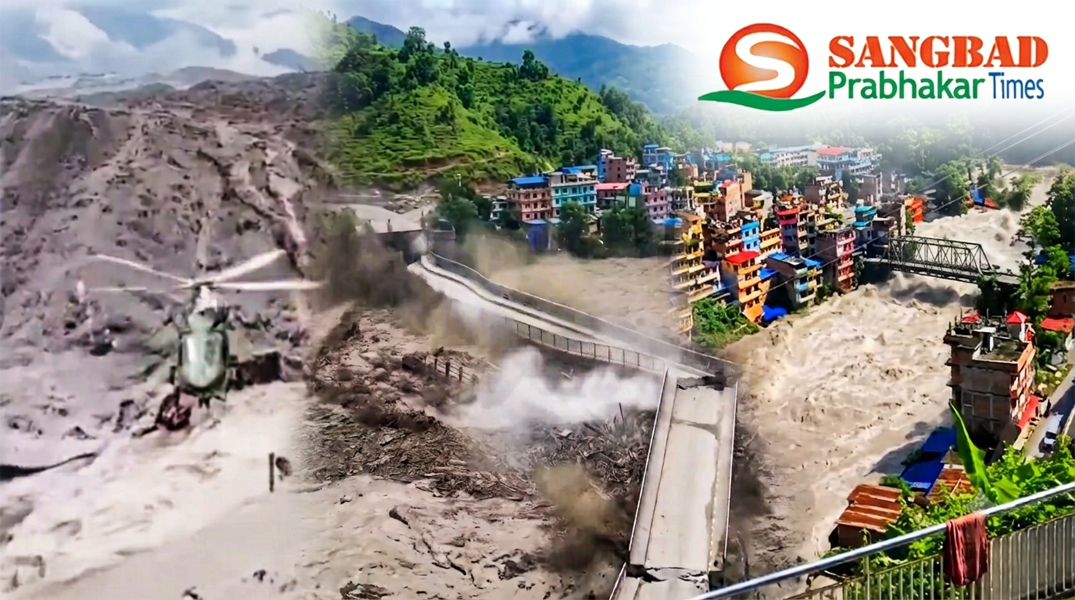

সেতু–রাস্তা–জলবিদ্যুৎ প্রকল্প ধ্বংস, অন্তত ৯৫ জনের মৃত্যু, শত শত মানুষ নিখোঁজ—একটি আকস্মিক বন্যা কীভাবে নেপালের সীমান্তবর্তী অঞ্চল থেকে আন্তর্জাতিক মানবিক সংকটে পরিণত হল

Published on: আগ ২৬, ২০২৬ at ২৩:৪২

লিখেছেন: অনিরুদ্ধ পাল
সংবাদ প্রভাকর টাইমস
সংবাদ প্রভাকর টাইমস বিশেষ প্রতিবেদন: হিমালয়ের কোলে একটি নদী। পাহাড়ি জনপদ। সীমান্ত বাণিজ্যের গুরুত্বপূর্ণ পথ। পর্যটকদের ব্যস্ত যাত্রাপথ। আর তার মধ্যেই কয়েক ঘণ্টার এক ভয়ঙ্কর জলস্রোত—যা বদলে দিল গোটা অঞ্চলের চেহারা।
২৬ আগস্ট সকালে নেপালের রাসুয়া জেলায় ভোটেকোশি নদীতে নেমে আসা আকস্মিক বন্যা প্রথমে একটি স্থানীয় বিপর্যয় বলেই মনে হয়েছিল। কিন্তু সময় যত গড়িয়েছে, ততই স্পষ্ট হয়েছে এই বিপর্যয়ের ব্যাপ্তি অনেক বড়। নেপালে অন্তত ৯৫ জনের মৃত্যুর খবর পাওয়া গেছে। শত শত মানুষ এখনও নিখোঁজ বা যোগাযোগবিচ্ছিন্ন। তাঁদের মধ্যে রয়েছেন বিপুল সংখ্যক বিদেশি পর্যটক ও ভ্রমণকারীও। সীমান্তবর্তী তিব্বতেও প্রাণহানি ও ব্যাপক ক্ষয়ক্ষতির খবর এসেছে।
এখন প্রশ্ন একটাই—এটি কি শুধুই একটি আকস্মিক বন্যা, নাকি হিমালয়ের ক্রমবর্ধমান প্রাকৃতিক অস্থিরতার আরও একটি ভয়ঙ্কর সতর্কবার্তা?
জল এল কোথা থেকে, আর এত ভয়ঙ্কর হল কেন?
বিপর্যয়ের প্রথম খবর সামনে আসার সময় ঘটনাটিকে তিব্বতের দিক থেকে নেমে আসা বিপুল জলরাশির আকস্মিক আঘাত হিসেবেই বর্ণনা করা হয়েছিল। পরে পরিস্থিতি নিয়ে একাধিক বৈজ্ঞানিক ব্যাখ্যা সামনে আসতে শুরু করে।
রয়টার্সের সর্বশেষ বিশ্লেষণ অনুযায়ী, প্রাথমিকভাবে ঘটনাটির সঙ্গে একটি হিমবাহ-সম্পর্কিত ধস ও নদীর প্রবাহে বাধা তৈরির সম্ভাবনার কথা উঠে এসেছে। তবে পরে মার্কিন ভূতাত্ত্বিক সংস্থার বিশ্লেষণে বলা হয়েছে, বন্যার আগে ভূমিকম্প ঘটেছিল—এমন প্রমাণ মেলেনি; ভূমিধসের ঘটনাই প্রবল জলস্রোতের আগে ঘটেছিল বলে ইঙ্গিত মিলেছে। অর্থাৎ বিপর্যয়ের প্রকৃত কারণ নিয়ে তদন্ত এখনও চলছে এবং চূড়ান্ত সিদ্ধান্তে পৌঁছনো হয়নি।
এই অনিশ্চয়তাই হিমালয়ের বিপদকে আরও জটিল করে তোলে। পাহাড়ে ভূমিধস, বরফ বা হিমবাহের অস্থিরতা, নদীর প্রবাহে সাময়িক বাধা এবং তারপর আচমকা বিপুল জলরাশির মুক্তি—এই ধরনের ঘটনাগুলিতে সতর্ক হওয়ার সময় অনেক ক্ষেত্রেই অত্যন্ত কম।
শুধু নদীর জল নয়, ভেসে গেল উন্নয়নের পরিকাঠামোও
ভিডিওগুলিতে দেখা যাচ্ছে প্রবল কাদামাখা জলরাশি মুহূর্তের মধ্যে সেতু ও অন্যান্য পরিকাঠামোকে গ্রাস করছে। রাসুয়া থেকে নুয়াকোট এবং ভাটির দিকে একাধিক এলাকায় রাস্তা, সেতু ও বসতি ব্যাপকভাবে ক্ষতিগ্রস্ত হয়েছে।
এটি বিশেষভাবে গুরুত্বপূর্ণ কারণ এই অঞ্চল নেপাল–চীন সীমান্ত বাণিজ্য এবং পর্যটন যোগাযোগের একটি গুরুত্বপূর্ণ করিডর। সীমান্তবর্তী যোগাযোগব্যবস্থা ক্ষতিগ্রস্ত হওয়া মানে শুধু স্থানীয় মানুষের যাতায়াত ব্যাহত হওয়া নয়; এর প্রভাব পড়তে পারে বাণিজ্য, পর্যটন, সরবরাহব্যবস্থা এবং উদ্ধার অভিযানের উপরও।
এই বিপর্যয়ে জলবিদ্যুৎ পরিকাঠামোর ক্ষতিও নতুন করে উদ্বেগ বাড়িয়েছে। একাধিক প্রকল্প ক্ষতিগ্রস্ত হওয়ায় বিদ্যুৎ উৎপাদন ও সরবরাহেও প্রভাব পড়েছে। পাহাড়ি নদীকে কেন্দ্র করে গড়ে ওঠা উন্নয়ন প্রকল্পগুলির ভবিষ্যৎ নিরাপত্তা নিয়েও তাই নতুন করে প্রশ্ন উঠছে।
পর্যটন করিডরেই কেন এত বড় মানবিক সংকট?
রাসুয়া অঞ্চল শুধু একটি সীমান্তবর্তী পাহাড়ি জেলা নয়। এই অঞ্চল লাংটাং জাতীয় উদ্যান, গোসাইকুণ্ড এবং কৈলাস–মানস সরোবরগামী বিভিন্ন ভ্রমণপথের সঙ্গে যুক্ত। ফলে বিপর্যয়ের সময় সেখানে স্থানীয় বাসিন্দাদের পাশাপাশি বিপুল সংখ্যক দেশি-বিদেশি পর্যটক ও ভ্রমণকারী উপস্থিত ছিলেন।
সর্বশেষ রিপোর্টে শত শত মানুষ নিখোঁজ থাকার কথা বলা হয়েছে। বিভিন্ন সূত্রে সংখ্যার তারতম্য থাকলেও একটি বিষয় পরিষ্কার—এই বিপর্যয় দ্রুত আন্তর্জাতিক মাত্রা পেয়েছে। ভারত, ব্রিটেন, যুক্তরাষ্ট্র, দক্ষিণ কোরিয়া, মালয়েশিয়া, অস্ট্রেলিয়াসহ বিভিন্ন দেশের নাগরিকদের খোঁজ চলছে।
এখানেই আধুনিক পর্যটনের একটি বড় দুর্বলতা সামনে আসে।
পাহাড়ি পর্যটন যত জনপ্রিয় হচ্ছে, ততই দুর্গম অঞ্চলে মানুষের উপস্থিতি বাড়ছে। কিন্তু প্রশ্ন হল, পর্যটনের পরিকাঠামো, জরুরি যোগাযোগব্যবস্থা এবং দ্রুত সরিয়ে নেওয়ার প্রস্তুতি কি সেই একই গতিতে শক্তিশালী হচ্ছে?
উদ্ধার অভিযান: সময়ের সঙ্গে লড়াই
বিপর্যয়ের পরে নেপালি সেনাবাহিনী, পুলিশ ও অন্যান্য উদ্ধারকারী সংস্থা অভিযান শুরু করেছে। কিন্তু পাহাড়ি বিপর্যয়ের সবচেয়ে বড় সমস্যা হল—যে অবকাঠামো দিয়ে উদ্ধারকারী দল পৌঁছবে, বিপর্যয়ের প্রথম ধাক্কাতেই অনেক সময় সেই রাস্তা ও সেতুই ধ্বংস হয়ে যায়।
প্রবল স্রোত, কাদা ও ধ্বংসাবশেষ উদ্ধারকাজকে কঠিন করে তুলেছে। কোথাও হেলিকপ্টার ব্যবহার সীমিত হয়ে পড়েছে পরিস্থিতির কারণে। ফলে নিখোঁজদের সন্ধানে প্রতিটি ঘণ্টা অত্যন্ত গুরুত্বপূর্ণ হয়ে উঠেছে।
এই পরিস্থিতি আবারও মনে করিয়ে দিচ্ছে—পাহাড়ি অঞ্চলে দুর্যোগ মোকাবিলার মূল চ্যালেঞ্জ শুধু উদ্ধারকারী বাহিনীর সংখ্যা নয়; শেষ প্রান্ত পর্যন্ত যোগাযোগ বজায় রাখা এবং দ্রুত বিপদসংকেত পৌঁছে দেওয়াও সমান গুরুত্বপূর্ণ।
নেপালের বিপর্যয়, সতর্ক হচ্ছে ভারতও
ভোটেকোশি ও ত্রিশূলী নদী ব্যবস্থার জলপ্রবাহ ভাটির দিকে এগিয়ে ভারতের নদীব্যবস্থার সঙ্গেও যুক্ত। সেই কারণে নেপালের এই বিপর্যয়ের পর ভারতের কিছু অংশেও সতর্ক নজর রাখা হচ্ছে।
এটি দেখিয়ে দেয়, হিমালয়ের কোনও বড় প্রাকৃতিক বিপর্যয় আজ আর শুধু একটি দেশের অভ্যন্তরীণ বিষয় নয়। নদীর কোনও আন্তর্জাতিক সীমান্ত নেই। পাহাড়ে তৈরি হওয়া বিপদ ভাটির দিকে কয়েকশো কিলোমিটার দূরের জনপদেও প্রভাব ফেলতে পারে।
তাই ভবিষ্যতে নেপাল, ভারত ও চীনের মধ্যে নদী পর্যবেক্ষণ, আবহাওয়া ও ভূমিধস-সংক্রান্ত তথ্যের দ্রুত আদানপ্রদান আরও গুরুত্বপূর্ণ হয়ে উঠতে পারে।
সবচেয়ে বড় প্রশ্ন: আমরা কি এখনও বিপর্যয়কে শুধু ‘দুর্ঘটনা’ হিসেবে দেখছি?
হিমালয় বিশ্বের অন্যতম ভূতাত্ত্বিকভাবে সক্রিয় এবং পরিবেশগতভাবে সংবেদনশীল অঞ্চল। এখানে পাহাড় কাটা, সড়ক নির্মাণ, জলবিদ্যুৎ প্রকল্প, পর্যটনের বিস্তার এবং পরিবর্তিত আবহাওয়ার প্রভাব—সবকিছু একসঙ্গে কাজ করছে।
তবে এই বিপর্যয়ের জন্য কোনও একটি কারণকে দায়ী করা এখনই বৈজ্ঞানিকভাবে সঠিক হবে না। তদন্ত শেষ হওয়ার আগে জলবায়ু পরিবর্তন, উন্নয়ন প্রকল্প বা অন্য কোনও একটি বিষয়কে একক কারণ হিসেবে চিহ্নিত করা যাবে না।
কিন্তু এটুকু বলা যায়, হিমালয়ের মতো অতি সংবেদনশীল অঞ্চলে ঝুঁকির মাত্রা বেড়ে গেলে একটি প্রাকৃতিক ঘটনা দ্রুত বহুস্তরীয় মানবিক, অর্থনৈতিক এবং আন্তর্জাতিক সংকটে পরিণত হতে পারে।
রাসুয়ার ঘটনা তারই নির্মম উদাহরণ।
সামনে কী?
এই মুহূর্তে সবচেয়ে জরুরি কাজ তিনটি—
প্রথমত, নিখোঁজদের দ্রুত সন্ধান এবং দুর্গত মানুষদের উদ্ধার।
দ্বিতীয়ত, ভাটির দিকের জনপদে নিরবচ্ছিন্ন সতর্কতা ও দ্রুত সরিয়ে নেওয়ার ব্যবস্থা।
তৃতীয়ত, এই বিপর্যয়ের প্রকৃত কারণ নিয়ে বিজ্ঞানভিত্তিক ও আন্তর্জাতিক পর্যায়ের তদন্ত।
কারণ শুধুমাত্র কতজন মানুষ প্রাণ হারালেন, কতটি সেতু ভেঙে গেল বা কত কোটি টাকার ক্ষতি হল—সেই হিসাবেই যদি এই বিপর্যয়ের মূল্যায়ন শেষ হয়ে যায়, তাহলে সবচেয়ে গুরুত্বপূর্ণ প্রশ্নটি অধরাই থেকে যাবে।
পরবর্তী বিপর্যয় যখন আসবে, তখন কি আমরা আরও আগে সতর্ক হতে পারব?
রাসুয়ার ভয়াবহ বন্যা আজ নেপালের জন্য এক গভীর মানবিক সংকট। কিন্তু তার প্রতিধ্বনি আরও বিস্তৃত।
হিমালয়ের পাহাড় থেকে নেমে আসা সেই জলরাশি যেন একটাই প্রশ্ন ছুড়ে দিয়েছে—
উন্নয়ন, পর্যটন এবং প্রকৃতির মধ্যে ভারসাম্য রক্ষার প্রস্তুতি কি আমাদের সত্যিই যথেষ্ট?
নোট: পরিস্থিতি এখনও পরিবর্তনশীল। উদ্ধার অভিযান চলায় মৃত ও নিখোঁজের সংখ্যা এবং বিপর্যয়ের কারণ সংক্রান্ত তথ্য নতুন সরকারি ও আন্তর্জাতিক রিপোর্টের ভিত্তিতে পরিবর্তিত হতে পারে।
Published on: আগ ২৬, ২০২৬ at ২৩:৪২
From Rasuwa Across the Border: Has Nepal’s Sudden Flood Become a New Warning for the Himalayas?
By Aniruddha Pal | Sangbad Prabhakar Times
Special Report— A sudden and devastating flash flood in Nepal’s northern Rasuwa district has turned a remote Himalayan border region into the centre of an international humanitarian emergency, after torrents of water, mud and debris swept through settlements, roads, bridges and hydropower infrastructure on Wednesday.
At least 95 people have been confirmed dead in Nepal, according to Nepal Police, while hundreds remain unaccounted for. Across the border in Tibet, Chinese authorities have reported three deaths and hundreds missing after a mudslide struck the Gyirong border area. The combined toll has raised fears that the disaster could become one of the most serious cross-border Himalayan emergencies in recent years.
The scale of the disaster is still emerging. Rescue teams have struggled to reach affected communities because roads and bridges have been destroyed, communications have been disrupted and rivers remain swollen.
A disaster that began in the mountains
The flooding struck the Bhotekoshi river system in the Rasuwa region, close to Nepal’s border with China. The first reports described an extraordinary surge of water and debris moving rapidly through the mountain valleys.
Reuters reported that a major mud and rock collapse into the river may have been associated with a 4.4-magnitude earthquake, while satellite imagery and other assessments have also pointed to the possibility of a landslide or glacial collapse. The precise chain of events remains under investigation.
What is clear is how quickly the event overwhelmed the landscape.
Settlements, markets, bridges and road links were damaged or swept away. Hydropower installations and transmission infrastructure were also affected, cutting access to parts of the region and complicating the rescue operation.
The destruction has been particularly severe along the Bhotekoshi and downstream river corridors, with impacts extending into districts including Nuwakot, Dhading and Chitwan.
Hundreds of travellers caught in the disaster
The emergency has an international dimension because Rasuwa lies along routes used by trekkers, tourists and pilgrims travelling towards some of the Himalayas’ most important destinations.
The Nepal Tourism Board reported 384 travellers missing or out of contact, including 291 foreign nationals and 93 Nepali citizens in one of the latest reported counts. The affected routes include travel corridors associated with the Langtang region and pilgrimages towards Mount Kailash and Lake Mansarovar.
Foreign nationals reported missing have included citizens of India, Britain, the United States, Australia, Malaysia, South Korea and other countries.
For families waiting thousands of kilometres away, the destruction of communications has added another layer of uncertainty.
The infrastructure that connected the Himalayas has been broken
The flood has not simply damaged homes. It has attacked the infrastructure that allows people, goods and electricity to move through the Himalayan borderlands.
Roads have disappeared beneath debris. Bridges have been swept away. Border facilities have been damaged. Hydropower projects have been disrupted and workers at some installations have been reported missing or out of contact.
On the Chinese side, the disaster also disrupted roads, communications and electricity infrastructure around the Gyirong area, according to reports citing Chinese authorities.
This has transformed what might initially have appeared to be a local natural disaster into a cross-border crisis involving tourism, trade, energy, transport and humanitarian rescue.
Why rescue efforts are proving so difficult
In the Himalayas, geography can turn a natural disaster into an operational nightmare.
A conventional flood may leave roads and landing areas intact. Here, the flood itself has destroyed many of the routes needed to reach survivors.
Bad weather has also hampered helicopter operations. Rising river levels, unstable slopes and large quantities of sediment and debris are making movement dangerous.
Nepal’s security forces have been deployed for search-and-rescue operations, while helicopters and drones are being used where conditions allow. China has also mobilised hundreds of rescuers in the affected Tibetan region.
At least 63 rescued survivors were receiving medical treatment in hospitals in Kathmandu and other locations, according to Nepal Police.
But the rescue operation is racing against time.
Is this a new Himalayan warning?
That may ultimately be the most important question raised by the disaster.
The Himalayas are naturally exposed to earthquakes, landslides, avalanches, extreme rainfall and sudden river surges. But scientists and disaster experts have increasingly warned that a warming climate can intensify several of these risks by destabilising glaciers, increasing glacial melt and altering precipitation patterns.
That does not mean every Himalayan flood can automatically be attributed to climate change.
In the Rasuwa disaster, investigators are still trying to establish whether the immediate trigger was an earthquake-related landslide, an ice or glacial collapse, a sudden release of water, or a combination of factors.
But the larger vulnerability is difficult to ignore.
A rapidly changing Himalayan environment sits alongside expanding roads, hydropower projects, settlements and tourism corridors. When an extreme natural event occurs, the consequences can travel far beyond the original mountain valley.
From a remote valley to an international emergency
The Rasuwa flood illustrates how interconnected the modern Himalayas have become.
A landslide or sudden collapse high in the mountains can destroy a river crossing. That can cut a highway. The loss of the highway can isolate villages and hydropower projects. Damaged communications can prevent families from establishing contact with relatives. At the same time, tourists and pilgrims travelling through the region can suddenly become part of a mass rescue operation.
The crisis has already crossed national boundaries.
Nepal is dealing with deaths and widespread destruction in its northern districts, while China is responding to casualties and infrastructure damage in Tibet. India has also been monitoring the downstream implications as Himalayan rivers swell and flood alerts are issued in parts of the country’s north.
The lesson beyond Rasuwa
The immediate priority is rescue.
But once the waters recede, governments across the Himalayan region will face a much bigger question: are existing early-warning and disaster-response systems designed for the speed and scale of the hazards now confronting the mountains?
The answer may determine whether future disasters remain local emergencies or become international crises.
Better cross-border monitoring of glaciers, landslides and river levels could provide crucial minutes or hours of warning. Early-warning systems need to reach remote communities, transport operators, hydropower workers and tourists—not simply government control rooms.
Tourism routes will also require new risk assessments.
For Nepal, Tibet and the wider Himalayan region, the challenge is no longer simply how to attract more visitors or build more infrastructure. It is how to make those networks resilient enough to survive an increasingly volatile mountain environment.
The Bhotekoshi flood has shown just how narrow the margin can be.
From Rasuwa to Tibet, and downstream towards the plains, the message from the Himalayas is stark: a disaster that begins in one mountain valley can cross borders, disrupt economies and put hundreds of lives at risk within hours.
The rescue operation continues. The larger warning may take much longer to understand.
Source note: The casualty and missing-person figures above reflect the latest reports available on 26 August 2026 and may change as rescue teams regain access to isolated areas and authorities reconcile lists. Nepal Police reported 95 deaths; separate reporting from China indicated three additional deaths in Tibet.